
Safety is Sacred
Updated: May 20
Indigenous women have shared the solutions for safety for decades—yet too often, their voices have not been acted on. It’s time to change that.
The Indigenous Women’s Accountability Table (IWAT) members are issuing a call for collective action and sharing what safety looks like for Indigenous women, families, and communities. Creating safety for Indigenous women is a shared responsibility—across governments, industries, organizations, and communities.
Grounded in decades of advocacy and the Calls for Justice, we’re sharing resources to deepen understanding and support meaningful action across all sectors.
Creating safety is a shared responsibility. Learn, reflect, and take action. We all have a role to play. What will yours be?
Highlights
(Click to jump to section):
Indigenous Women’s Accountability Table Statement
Our Safety is Sacred: Recognizing Red Dress Day
Today is Red Dress Day - a national day of remembrance and action dedicated to honoring Missing and Murdered Indigenous Women, Girls, and Two-Spirit People (MMIWG2S+).
Violence against Indigenous women has doubled since the National Inquiry – this wouldn’t happen if the Calls for Justice that keep us safe were implemented.
It’s time to build a future where all Indigenous women and families are safe and well.
#SafetyIsSacred Campaign
How are you creating safety for Indigenous women?
The recommendations laid out in Breaking Free from Family Violence, 1989 and echoed in countless reports led by Indigenous women remain urgent and unmet. Nearly four decades later, Indigenous women are still not safe. Our truths continue to be elevated, including through the National Inquiry’s Calls for Justice.
For decades we have outlined the path to safety. It is time to walk alongside us and act.
This month, ONWA and members of the Indigenous Women’s Accountability Table are:
Building Knowledge of the action needed on Calls for Justice that keep Indigenous women safe and the recommendations and Indigenous women-led solutions over decades
Building Capacity to take action by showcasing how Indigenous women are creating safety in their communities and sharing resources
Building Collective Action by inviting others to share how they are creating safety for Indigenous women
Follow along throughout May 2026.
Indigenous women are leading the work to create safety in their communities.
This includes the Indigenous Women’s Accountability Table - a national table of Indigenous women leaders working to create safety and healing for Indigenous women through systemic change, and holding governments accountable for commitments to address the MMIWG crisis.
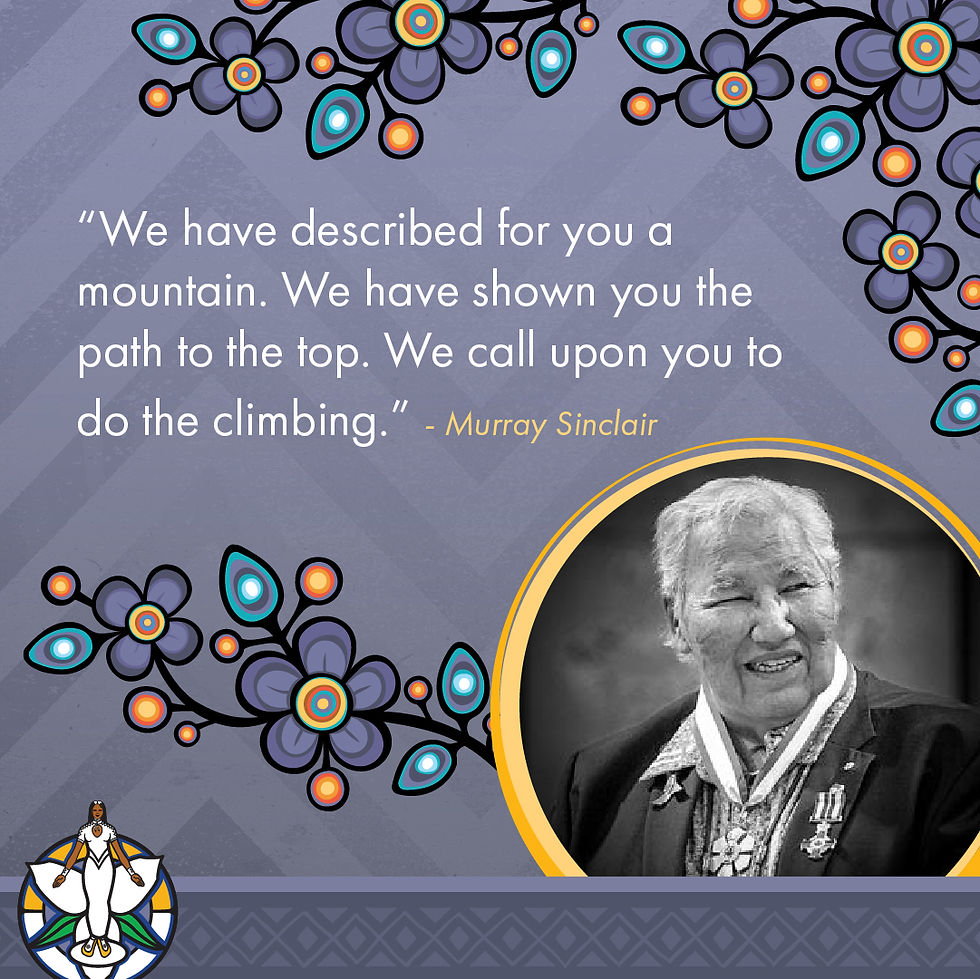
The Calls for Justice that keep Indigenous women safe require all of us to lead. We all have a role to play, and responsibilities to pick up.
As Indigenous women, we continue to break the silence to advance safety and systemic change. For decades we have been calling for coordinated, accountable responses. Breaking Free, Breaking Through outlines community-driven solutions to dismantle systemic barriers.

In 1971, ONWA was incorporated by Dorthy Violet Lyons, Edith McLeod, Elizabeth Fenton, Mary Regina Madeline Pekki, Jean Plummer, Cecile MacLaurin, Beverly Frizado, Rosemarie Ahtila, Donna Lyons and Marge Lyons.
From the beginning, our goal was clear: bring together isolated Indigenous women’s organizations and strengthen their collective voice.
Today, our strategic vision continues that goal and reflects the complex and interconnected realities Indigenous women face.
At the center of the work is Indigenous women’s safety.

Indigenous women are leading the work to create safety in their communities.

The path to safety for Indigenous women has already been laid out before us – including by trailblazers like Dorothy Wynne.
An Elder and advocate, she dedicated to life to grassroots organizing and recognition of Indigenous women’s rights.
“When the Ontario Native Women’s was formed in 1971, we found our voice. A lot of issues have been resolved. We’ve come a long way. I’m really proud to be part of the Ontario Native Women’s Association. Pre-ONWA there were a lot of issues to address, but where do you go? We didn’t have the officials. We didn’t have an advocate.” - Dorothy Wynne, 1991

The path to safety for Indigenous women has already been laid out before us – including by trailblazers like Catherine “Kitty” Everson.
Though the residential school system tried to take her language, she held onto it fiercely. She spoke it, protected it, and carried it proudly. Her language was her resistance. It was her protection. It was part of her bundle and the medicine she used to heal herself and others. Her language was home and she fought for it relentlessly.
Kitty was a grandmother for the Indigenous Women’s Accountability Table sharing her wisdom and leadership in advancing community safety and healing.
Who are the Indigenous Women’s Accountability Table (IWAT)
The Indigenous Women’s Accountability Table is a national table of Indigenous women leaders working to create safety and healing for Indigenous women through systemic change. The Table advances Indigenous women’s safety, monitors the implementation and outcomes of the MMIWG2S National Action Plan, and holds the government accountable for its commitments to addressing the MMIWG crisis.
Current Members Include:
Cora McGuire-Cyrette, Chair – Ontario Native Women's Association (ONWA)
Joan Riggs, Facilitator – Catalyst Research and Communications
Sandra Montour, Member – Ganohkwasra Family Assault Support Services
Fay Blaney, Member – Aboriginal Women’s Action Network
Stephanie Mikki Adams, Member – Inuuqatigiit Centre for Children, Youth and Families
Terry Swan, Member – Wahkohtowin Consulting,
Kathy Absolon, Member – Wilfred Laurier University
Odelle Pike, Member – Newfoundland Aboriginal Women’s Network
Shirely Cuillierrier, Member – Former RCMP Assistant Commissioner, Policing/Justice Consultant and Indigenous Relations Advisor
Jeanine George, Member – Aboriginal Shelters of Ontario

